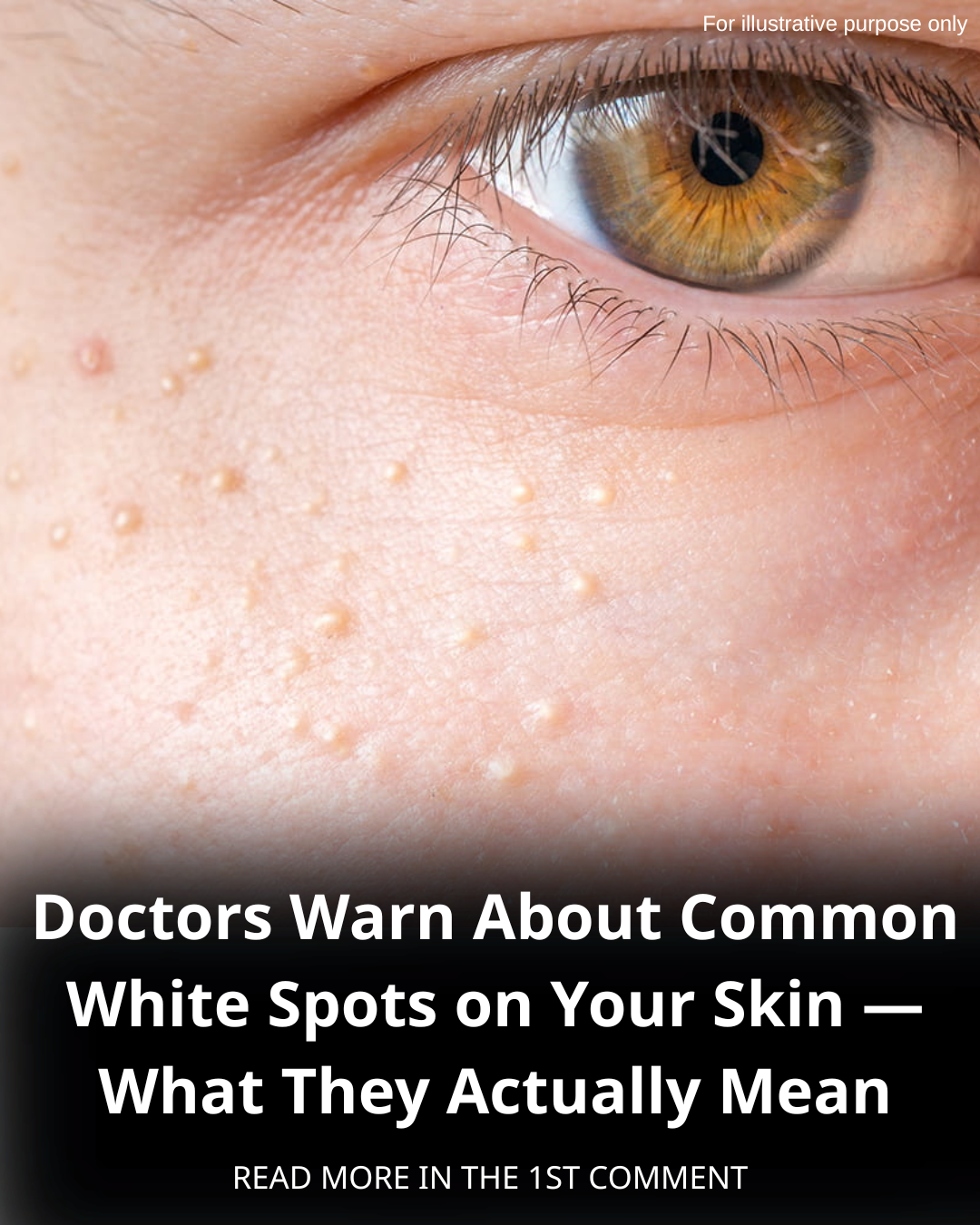
Experts have issued a warning about white spots that can appear on the face and g.enitals.
These spots are quite common and usually harmless, but many people become concerned when they notice them. They typically develop due to a buildup of keratin or dead skin cells within the skin, forming what is essentially a tiny cyst.

Although these spots can appear at any time in life, they tend to become more noticeable during puberty, when hormonal changes cause the skin to become oilier.
Despite being common, health experts urge anyone who notices them to take care—so they don’t turn into something more serious.
These white bumps are known as milia, often referred to as milk spots.
Explaining what they are, the Cleveland Clinic states: “They become more noticeable during or after puberty. They often appear on and around your lips and sometimes on your penis and vagina. They’re a natural part of your skin, but treatments can shrink or remove them.”
It’s also important to note that these spots are different from acne or other skin conditions such as cold sores or genital herpes.

Dr. Marnie Nussbaum, clinical instructor of dermatology at Weill Cornell Medical College, told Women’s Health: “Milia are tiny keratin-filled cysts on the surface of the skin. They are often confused with whiteheads or acne breakouts. However, these bumps are filled with hard balls of keratin, as opposed to liquid sebum and bacteria. And they cannot be extracted easily.”
Acne, by contrast, develops when pores become blocked, sometimes allowing bacteria to infect the area.
Meanwhile, herpes is a completely different condition—a viral infection transmitted through close physical contact, often during sexual activity with an infected person. Cold sores, caused by a related virus, are more commonly found on the face.
While milia are common and harmless, medical experts have one important warning: avoid picking at or popping them. Doing so won’t make them go away.
In fact, regularly picking at them can lead to infection, which can make the problem much worse.
It can be tempting to try and remove them yourself, but causing an infection in those areas can ultimately worsen the symptoms.

As Healthline advises: “Don’t pick or squeeze Fordyce spots. This won’t make them go away, and it can cause infections to develop.”
If you find milia bothersome, there are safe treatments that can remove them.
And as always, if you notice anything new or unusual on your skin, or if you’re unsure about what you’re seeing, it’s best to speak to your doctor for proper advice.
Source: unilad.com